Does Insurance Cover Solar Panel Detach & Reset? What Owned vs. Leased Actually Changes

Table of Contents
- The Short Answer: There's No Blanket Rule — Coverage Depends on the Policy and the Lease, Not Ownership Alone
- The Two Questions Everyone Collapses Into One
- The Three Answers Contractors Hear — and What's Wrong With Each
- Owned vs. Leased: What Actually Changes
- How to Scope Solar D&R So It Doesn't Get Missed
- What Detach & Reset Actually Costs
-
Frequently Asked Questions
- Does homeowners insurance pay to remove and reinstall solar panels for a roof replacement?
- Who pays to detach and reset leased solar panels?
- Does insurance cover solar panel removal if the panels aren’t damaged?
- How much does solar panel detach and reset cost?
- Can a roofing contractor remove the solar panels themselves?
- Is detach and reset a separate line item?
- Final Thoughts
Key Takeaways
- Ownership (owned vs. leased) decides whose policy insures the panels — not whether insurance covers detaching and resetting them for a roof repair.
- D&R coverage comes down to two documents: the homeowner’s policy, and, for leased/PPA systems, the solar lease agreement.
- The panels aren’t the claim. Removing them is a cost of accessing the covered roof underneath — the same category as detaching a satellite dish or roof-mounted HVAC.
- Leased systems are a two-document question and usually restrict D&R to one authorized vendor, so cost tends to run higher with no competing bid.
- D&R gets missed because it isn’t scoped, not because it isn’t coverable. Document the array at inspection and attach the vendor’s written bid.
There are 22 panels sitting on a roof that’s already approved for replacement, and nobody has scoped them. The crew is scheduled. Three different desk adjusters have given three different answers about who pays to detach and reset the array. None of them provided wrong answers on purpose; they were just answering the wrong question.
Most of the confusion around Detach and Reset (D&R) solar panels stems from a single false assumption: that ownership (owned versus leased) determines whether insurance covers the work. It doesn’t–at least not on its own. This guide breaks down what actually determines coverage, what changes between owned and leased systems, and how to scope the work so it doesn’t get missed.
The Short Answer: There's No Blanket Rule — Coverage Depends on the Policy and the Lease, Not Ownership Alone
There’s no blanket rule that leased solar panels are automatically the leasing company’s responsibility, and no blanket rule that insurance will always cover detaching and resetting an array for a roof repair. Coverage usually comes down to two documents: the homeowner’s insurance policy, and, for leased or PPA-financed systems, the agreement between the homeowner and the solar company.
Here’s the mechanism. If the solar lease requires the leasing company to perform any detach-and-reset work itself, the carrier will review that lease agreement alongside the homeowner’s policy to figure out who’s actually responsible for the cost. If the lease doesn’t require that, the carrier evaluates the D&R the way it evaluates any other repair-access cost: against the homeowner’s policy alone, and if it’s covered, generally at applicable Xactimate pricing.
That’s a more complicated answer than “ownership decides it all,” but it’s the accurate one. Carrier representatives are also clear that they can’t give general coverage examples, because every policy is different, which is exactly why treating this as a documentation problem, not an ownership problem, matters. For background on why this kind of gap shows up on claims at all, see how insurance claim supplements work.
The Two Questions Everyone Collapses Into One
Most of the confusing advice circulating about solar D&R comes from mashing two separate questions into one.
Question A — Are the Panels Themselves Damaged Property?
This is where ownership genuinely matters. An owned system is typically treated as part of the dwelling and insured under the homeowner’s own policy. A leased or PPA-financed system is typically insured under the leasing company’s commercial policy, not the homeowner’s. (Some policies carve out wind or hail exclusions for roof-mounted equipment specifically.)
Question B — Is Removal a Necessary Cost of Repairing the Roof?
This is the question contractors are actually asking, and ownership alone doesn’t answer it. The panels aren’t damaged; the roof underneath them is, and the roof is what’s covered. Detaching an array to access a covered roof surface is, functionally, the same category of cost as detaching a satellite dish or a roof-mounted HVAC unit to get a crew onto the deck. Whether that cost lands on the claim depends on what the homeowner’s policy allows and, for leased systems, on what the lease agreement says about who’s responsible for the work.
Why the Confusion Persists
Nearly everything published on this topic is written by solar companies answering Question A, coverage of the equipment itself, while contractors show up needing Question B answered: whether the removal cost belongs on the roof claim. Two different questions, two different answers, and almost no one draws the line between them.
The Three Answers Contractors Hear — and What's Wrong With Each
“If the panels are leased, insurance won’t pay”
This is the most common version of the myth, and it’s an oversimplification rather than a flat truth. There’s no blanket rule either way. What actually decides it is whether the lease agreement puts the D&R obligation on the leasing company, and if it doesn’t, the homeowner’s policy is evaluated on its own terms, the same as it would be for an owned system.
“Insurance pays the solar company directly”
Carriers indemnify the insured, generally the homeowner, not the solar vendor. The solar company typically invoices the homeowner, and that invoice flows into the claim from there; there isn’t a direct contractual relationship between the carrier and the leasing company. Payment routing can look different where an assignment of benefits is involved, but AOB rules vary significantly by state, and some states restrict it outright — that’s a conversation for the homeowner and carrier, not a general rule to apply here.
“It depends on the carrier and the policy”
Technically true, but incomplete enough to be practically useless. It’s not just the carrier and the homeowner’s policy; it’s also the solar lease agreement, and that’s the piece most contractors forget to ask about. What actually varies is whether the D&R was scoped at all, what the carrier will allow once it’s raised, and what documentation they want to see. Initial estimates coming in short isn’t unique to solar; it’s why initial estimates come in under scope on all kinds of claims. The real variable here, as always, is documentation, not ownership.
Owned vs. Leased: What Actually Changes
| Factor | Owned System | Leased / PPA System |
|---|---|---|
| Who insures the panels | Homeowner’s policy (may need to confirm equipment is covered) | Typically the leasing company’s own commercial policy |
| Who may perform the D&R work | Homeowner can choose any qualified solar contractor | Often restricted to the leasing company’s authorized vendor, per the lease |
| Whether D&R cost may be covered on the roof claim | Evaluated against the homeowner’s policy | Evaluated against the homeowner’s policy and the lease agreement’s terms |
| Documentation the carrier is likely to request | Solar vendor bid/invoice, array photos | Solar vendor bid/invoice, array photos, plus the lease agreement itself |
| Who receives the claim payment | Standard claims process — payment issued to the insured | Same general claims process, though lease terms should be confirmed |
| Typical cost exposure | Generally lower; homeowner can shop competing quotes | Often higher; sole authorized vendor, no competitive bidding |
The pattern in this table comes down to one thing: an owned system is a one-document question, while a leased system is a two-document question. For an owned system, the carrier only has to weigh the homeowner’s policy, but a leased system also demands the lease agreement — who insures the equipment, who’s authorized to touch it, what paperwork gets requested, and where the cost tends to land all shift once that second document enters the picture. The lease agreement and the insurance claim are two separate problems. Contractors who treat them as one end up guessing at an answer that’s actually sitting in a filing cabinet.
How to Scope Solar D&R So It Doesn't Get Missed
Catch It at Inspection, Not at Tear-Off
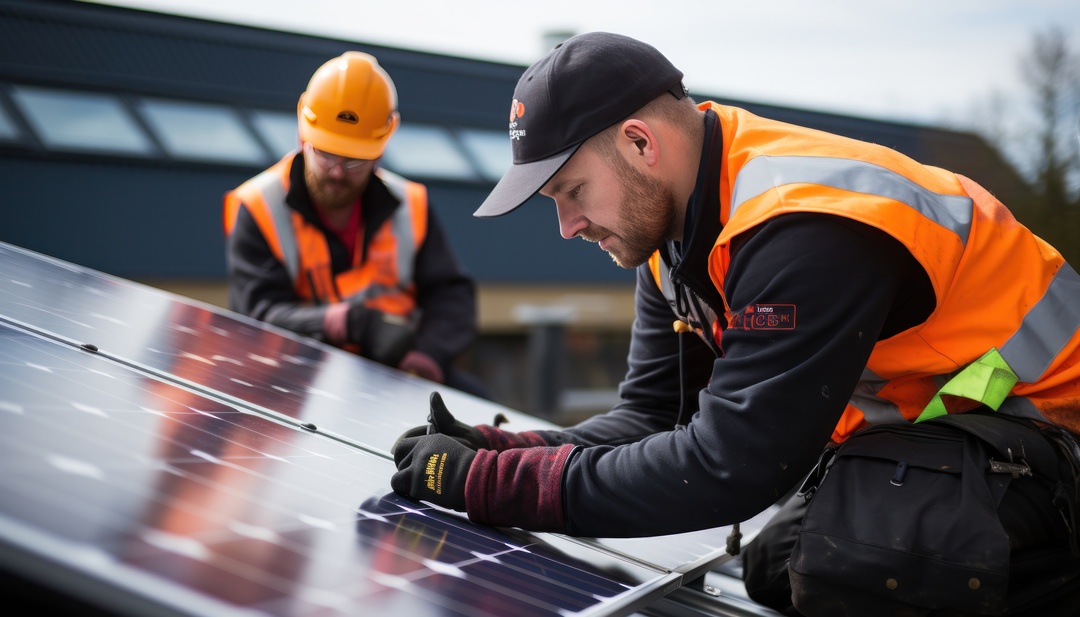
Document panel count, array layout by roof slope, inverter and racking condition, and every roof penetration the array creates before the array becomes a surprise at tear-off. Photograph the array from every elevation as part of the standard inspection, following the same photo documentation checklist used for the rest of the claim. This is the same discipline that catches damage found after the initial scope was written on any roof; solar just adds one more thing that’s easy to miss the first time through.
Get the Solar Vendor’s Written Quote Before You Submit
For leased systems especially, the leasing company is often the only authorized vendor. Their number is the number, and there’s no competing bid to lean on. According to Vladimir Shoshon, founder of Claim Supplement Pro and a Xactimate Level II certified estimator, CSP typically pursues solar D&R backed by the solar vendor’s own bid or invoice. Get that quote in hand before the scope goes to the carrier.
Confirm Coverage and Lease Responsibility Before You Commit
Before making any commitment to the homeowner about who’s paying for D&R, get the homeowner on the phone with their carrier. That conversation should nail down three things: whether the policy covers the D&R cost at all, whether the solar lease places that responsibility on the leasing company, and what additional documentation, typically the lease agreement itself, the carrier will need to make that determination. Carrier representatives are generally not able to give hypothetical coverage examples, since every policy differs, which is exactly why this has to be confirmed on the actual file rather than assumed from a rule of thumb.
What to Attach
Every document you attach should answer a question the adjuster would otherwise have to ask. For solar D&R, that typically means the solar vendor’s written bid or invoice, array photos from the inspection, and, for leased systems, the lease agreement itself, since that’s what the carrier will use to determine whether the leasing company shares responsibility for the cost.
Ready to get a second set of eyes on a file with solar in the scope? Send us your claim file and get a straight answer on what’s supportable.
What Detach & Reset Actually Costs

The number that actually matters on a given job is whatever figure is on the solar vendor’s written bid, not a market average. That’s why CSP pursues D&R backed by the vendor’s own invoice rather than a flat-rate assumption; system size, roof complexity, and which vendor is doing the work swing the price too much for a single number to be reliable on any individual claim.
For a general sense of scale, HomeAdvisor puts full-system solar removal typically between $3,000 and $12,500, with $5,000 as a common midpoint for an average residential system. Cost drivers include system size, the number of roof planes the array spans, roof pitch, tile versus asphalt substrate, and electrical permit or recommissioning fees. Leased systems tend to run toward the higher end of whatever range applies, since the leasing company is frequently the sole authorized vendor and there’s no competitive quote to compare against.
Frequently Asked Questions
Does homeowners insurance pay to remove and reinstall solar panels for a roof replacement?
When the roof is being replaced due to a covered loss, the cost of removing and resetting an array to access that roof is generally analyzed as part of the repair, but it has to actually be scoped and documented. It’s frequently absent from initial estimates simply because the array wasn’t accounted for in the first pass.
Who pays to detach and reset leased solar panels?
It depends on two things: what the homeowner’s policy allows, and what the lease agreement says about who’s responsible for that work. Some leases require the leasing company to handle D&R itself; others don’t. Confirm both documents before assuming either way.
Does insurance cover solar panel removal if the panels aren’t damaged?
The panels not being damaged is actually the point, as this isn’t a claim on the panels themselves. It’s an evaluation of whether removing them is a necessary cost of repairing the roof underneath, which is a separate question from whether the equipment was harmed.
How much does solar panel detach and reset cost?
It varies enough by system size and vendor that the solar company’s own written bid is the number to work from, rather than a flat market rate. As general context, HomeAdvisor puts full-system solar removal typically between $3,000 and $12,500. Leased systems tend to run higher, since the homeowner is usually locked into a single authorized vendor rather than able to shop competing quotes.
Can a roofing contractor remove the solar panels themselves?
Generally, no. Live electrical connections, manufacturer warranty conditions, and lease terms all point toward using a licensed solar contractor for the disconnect and reset. On leased systems, it typically isn’t the roofing contractor’s call at all; the lease agreement usually dictates who’s authorized to touch the equipment.
Is detach and reset a separate line item?
Yes, D&R is generally scoped as its own line item for each roof-attached component, separate from the roofing line items themselves. Specific pricing and item codes vary by estimating platform version and region, so they should be confirmed against the current price list rather than assumed.
Final Thoughts
Ownership answers a different question than the one most contractors are actually asking. Whether a homeowner owns or leases their solar system decides whose policy insures the equipment; it doesn’t, on its own, decide whether removing that equipment is a legitimate cost of repairing a covered roof. That determination comes down to the homeowner’s policy and, for leased systems, the lease agreement, checked together rather than assumed from a rule of thumb.
The lease agreement and the insurance claim are two separate problems, and treating them as one is where most of the confusion on this topic comes from. It’s the same argument CSP makes on code-required upgrades on a roof claim and on overhead and profit: legitimate scope, documented properly, gets addressed. Solar D&R isn’t an exception to that. It’s another example of it.
Need help getting a solar-equipped roof claim scoped correctly the first time? Our roofing supplement support team can review the file before it goes back to the carrier.