Building Code Upgrades in Insurance Claims: Getting Paid for Code Compliance


Table of Contents
- What Building Code Upgrade Coverage Actually Is (and Why It's Separate from Your Main Repair Scope)
- The Three Pillars — Coverage A, B, and C from a Contractor's Angle
- The Code-Required Line Items Carriers Leave Out of “Like Kind and Quality” Scopes
- The Contractor Documentation Playbook for Code Upgrade Supplements
- Three Carrier Objections (and How Contractors Counter Them)
- Case Study: $289K Code-Compliant Insulation Recovery on a Commercial Hail Claim
- State-by-State: How Code Adoption Affects Your Supplement Strategy
- When to Bring in a Supplement Partner
-
Frequently Asked Questions
- What Is Building Code Upgrade Coverage?
- Does Homeowners Insurance Cover Code Upgrades?
- What Is the Difference Between Coverage A, B, and C in Ordinance or Law?
- How Much Ordinance or Law Coverage Should a Property Carry?
- Are Code Upgrades Depreciable on an Insurance Claim?
- Who Pays for Code Upgrades on an Insurance Claim?
- Can a Contractor File a Supplement for Code Upgrade Items?
- What Triggers Ordinance or Law Coverage?
- Does Ordinance or Law Coverage Pay for Demolition of Undamaged Portions?
- How Long Does a Code Upgrade Supplement Take to Get Approved?
- Final Thoughts: Code Upgrades Are Recoverable Dollars, Not Donated Dollars
Key Takeaways
- Code upgrades are a separate coverage: Ordinance or Law coverage funds permit-required upgrades and sits separately from your main repair scope—often as 10%, 25%, or 50% of Coverage A.
- The three pillars matter: Coverage A pays for undamaged portions code requires you to replace, Coverage B covers demolition, and Coverage C pays for the increased cost of compliant construction.
- Documentation outranks rebuttal: Strong supplements connect the damaged area, the AHJ letter, the exact code citation, and the Xactimate F9 note—rebuttal-only submissions stall.
- Most code items are non-depreciable: The property owner didn’t benefit from the upgrade before the loss, so RCV and ACV often match on Coverage C items.
- Tear-off discoveries need immediate action: Stop work, photograph the condition, notify the carrier in writing, and submit a revised scope before continuing.
- Real recovery potential: One commercial hail claim went from $0 allocated for ISO insulation to $289,329.62 approved after a code-backed supplement package.
Building code upgrade coverage provides funding to bring a damaged property up to current building code requirements during a covered repair or rebuild. Contractors run into code issues on major losses because carrier estimates tend to focus on matching pre-loss materials instead of including permit-required upgrades.
This pushes unexpected costs onto the contractor or creates scope revisions after inspections and tear-off.
Our guide explains how contractors can identify code-triggered items, document them correctly, scope them in Xactimate, and recover legitimate code compliance costs through the supplement process.
What Building Code Upgrade Coverage Actually Is (and Why It's Separate from Your Main Repair Scope)
Building code upgrade coverage, also called Ordinance or Law coverage, covers the additional cost necessary to bring a damaged property into compliance with current building code requirements during a covered repair or rebuild. In practical terms, what is law and ordinance coverage comes down to the extra costs related to code-required demolition, reconstruction, and compliance work that falls outside a standard repair scope.
In case you wonder ‘how much ordinance or law coverage do I need,’ this depends on the property type, age, and how aggressively local jurisdictions enforce current code during permitted repairs, since older structures often cause more upgrade requirements during reconstruction.
Contractors usually encounter this coverage when local inspectors require upgrades beyond the original installation, such as updated fastening patterns, ventilation, fire protection systems, or insulation requirements.
FEMA’s “Building Codes Save: A Nationwide Study” also found that modern building codes drastically reduce long-term property losses from natural disasters, including hurricane winds, flooding, and earthquakes. The study projects more than $132 billion in avoided property losses attributable to modern code adoption by 2040, showing why jurisdictions continue updating code requirements after major weather events.
Most policies treat building code upgrade coverage as a separate limit instead of folding it into the standard dwelling or structure repair scope. Many carriers structure Ordinance or Law coverage as a percentage of Coverage A, commonly 10%, 25%, or 50%, although the actual amount depends on the policy and endorsements listed on the declarations page.
Contractors should assess the declarations page before assuming the approved estimate includes code-related costs.
Coverage typically applies when a covered loss forces a permitted repair or rebuild that must comply with current code requirements. The damage event triggers the code upgrade requirement, not the year when the municipality adopted the code.
Contractors generally address these items through insurance claim supplements after adjusters approve the initial repair scope.
The Three Pillars — Coverage A, B, and C from a Contractor's Angle
| Coverage Part | What It Pays For | Contractor / Real-World Example |
|---|---|---|
| Coverage A | Loss to the Undamaged Portion | If a municipality requires a full roof deck replacement once 25% is damaged, Coverage A pays for the remaining 75% of the undamaged deck that must be replaced. |
| Coverage B | Demolition Cost | Pays for the removal and hauling away of the undamaged roof deck and sheathing required by code. Standard scopes usually exclude this; Coverage B fills that gap. |
| Coverage C | Increased Cost of Construction | Covers mandatory code upgrades such as ring-shank nails, I&W shield membranes, continuous drip edge, code-compliant ventilation, or R-value insulation bumps. |
The Code-Required Line Items Carriers Leave Out of “Like Kind and Quality” Scopes
Carriers often write estimates around the materials that existed before the loss. That approach forms discrepancies between the approved scope and the work a contractor must complete to satisfy the local building department.
Contractors normally discover those gaps during inspections, tear-off, or permit review, when current code requirements trigger additional labor, materials, or disposal costs.
Most code-related disputes involve standard line items that contractors see every day. Roofing claims often require ice and water shield, updated fastening patterns, drip edge, or ventilation upgrades.
Siding repairs may require new WRB installation, kickout flashing, or revised fastener schedules.
Interior rebuilds can prompt GFCI protection, AFCI breakers, tempered glass, or insulation upgrades associated with current energy codes.
Commercial claims frequently involve fire suppression systems, ADA compliance, or updated insulation requirements under the IECC.
Building codes coverage supports these required upgrades when the policy includes Ordinance or Law provisions and the contractor documents the scope correctly. Missing that documentation can cause contractors to revisit the scope multiple times after the original estimate receives approval.
Roofing: The Five Items Adjusters Miss

Roofing claims generate some of the most common code-related supplements because modern code requirements rarely match older roof systems. Contractors who understand these requirements can build a more robust supplement file and avoid scope disputes later in the project.
A solid guide for navigating roofing insurance claims should always include code review before material ordering or installation begins.
The most common roofing code upgrades include:
- Ice and water shield requirements at eaves in qualifying climate zones under IRC R905.1.2
- Continuous drip edge requirements under IRC R905.2.8.5
- Ring-shank or high-wind nail requirements based on local wind zones
- Decking attachment spacing and fastener count upgrades required by the AHJ
- Ridge vent and attic ventilation ratio requirements under IRC R806
The International Code Council (ICC) publishes the IRC standards many jurisdictions adopt or modify locally. Contractors should always verify the exact code edition and local amendments with the AHJ before citing a code section in a supplement.
Siding

Siding repairs often set off weather-resistive barrier and flashing upgrades that older installations never included. Contractors regularly supplement for WRB installation, updated fastener schedules, and kickout flashing at roof-to-wall intersections because inspectors commonly require those items during partial rebuilds or elevation repairs.
Water Mitigation and Interior Rebuild

Interior rebuild projects create code issues that many original carrier scopes overlook. Inspections frequently reveal required GFCI outlets in wet areas, arc-fault breaker upgrades, tempered glass requirements near tubs and showers, and insulation R-value upgrades during drywall replacement.
Plumbing code requirements can also change the scope when a project incites partial re-piping or fixture replacement.
Fire Restoration
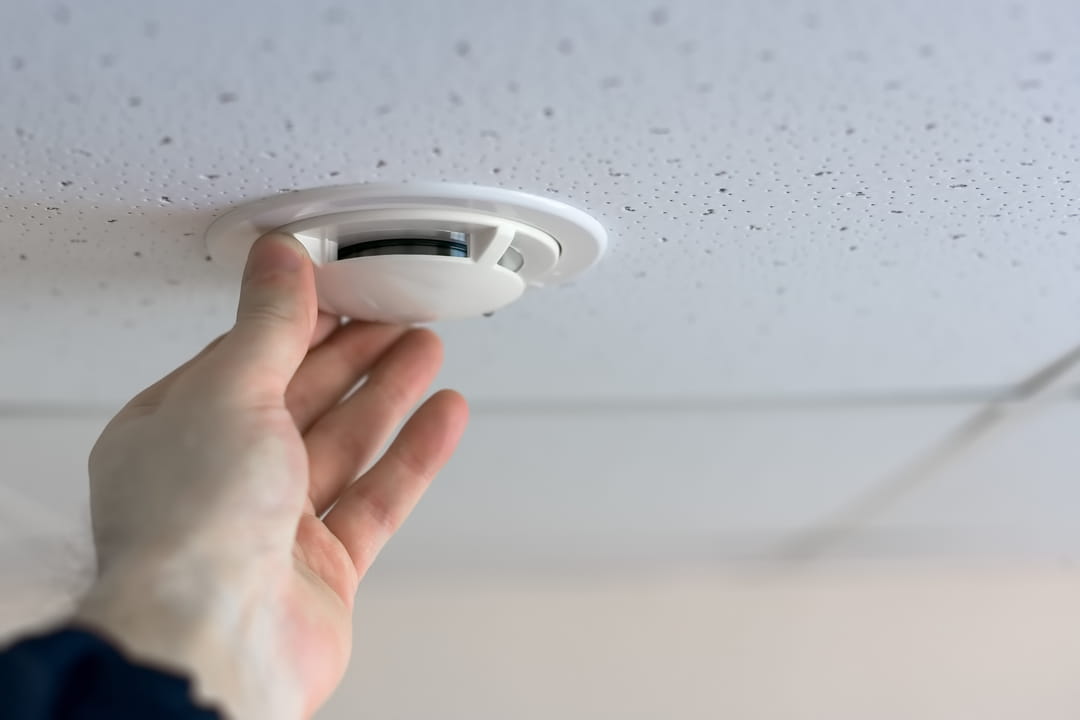
Fire losses may provoke some of the largest code upgrade costs in a claim. These claims may call for supplements for smoke and CO detector placement updates, fire-rated drywall assemblies in attached garages, egress window sizing, and sprinkler retrofits in commercial or multi-family properties.
Many jurisdictions base these requirements on NFPA standards such as NFPA 13 for sprinkler system installation and NFPA 72 for fire alarm and carbon monoxide detection systems. Local inspectors could stipulate that contractors bring affected areas into compliance with updated fire protection and life-safety standards before approving final occupancy or reconstruction sign-off.
Commercial

Commercial projects bring more compliance layers that contractors can’t ignore during reconstruction. Depending on the size and scope of the loss, contractors may need to account for ADA-related upgrades, fire suppression systems, IECC energy code requirements, or elevator modernization related to vertical rebuilds.
The Insurance Institute for Business & Home Safety (IBHS) also developed the FORTIFIED Commercial standard to strengthen commercial buildings against severe weather through enhanced roofing systems, improved attachment methods, and stronger building envelope protection. IBHS research shows that resilient commercial construction standards can reduce storm-related damage and help businesses reopen faster after major weather events.
Why Code Upgrade Items Are Typically Non-Depreciable
Carriers typically treat many code upgrade items as non-depreciable because the property owner didn’t receive the benefit of those upgrades before the loss occurred. In many cases, Coverage C items produce little or no gap between RCV and ACV, albeit policy language and carrier handling guidelines still govern the final payment structure.
Contractors often leverage this point during supplement discussions involving mandatory code compliance upgrades.
The Contractor Documentation Playbook for Code Upgrade Supplements
Most code upgrade supplements fail because contractors submit incomplete documentation, not because the policy automatically excludes the item. Adjusters need a clear paper trail that connects the code requirement to the damaged area, the permit process, and the updated Xactimate scope.
Early documentation of code issues usually moves supplements faster than relying on rebuttal language alone.
A structured building code supplement process helps contractors organize these requirements into a consistent, repeatable file format that supports carrier review.
What Every Code Upgrade Supplement Should Include
Every supplement file should connect the damaged condition, the code trigger, and the required repair scope in a way the adjuster can follow without extra explanation.
Include the following documentation in every code upgrade supplement:
- Before photos of the damaged area and the existing substrate
- Tear-off photos showing the pre-loss condition of the affected assembly
- AHJ letter or permit requirement printout
- Specific code citation with section number, such as IRC R905.2.8.5 for drip edge requirements or IRC R806 for attic ventilation requirements
- Manufacturer specification sheets for spec-driven installations
- Permit application showing required inspections
- Xactimate estimate with F9 notes related directly to the cited code section
Manufacturer documentation is especially important when installation requirements affect fastening patterns, ventilation assemblies, or accessory systems. For example, GAF Timberline HDZ shingles require specific accessory combinations for the WindProven warranty system, including starter strips, ridge cap shingles, roof deck protection, and leak barrier or attic ventilation.
Using manufacturer specifications alongside code citations reinforces supplement requests involving upgraded fastening or roofing assemblies.
How to Write the F9 Note That Adjusters Actually Approve
Good F9 notes stay short and documentation-focused, and cite the applicable code section, reference any attached documentation, and explain why the item applies to the repair scope.
The note should describe the requirement itself, not argue about coverage or carrier handling.
A clean F9 note usually reads like a field explanation. A structured Xactimate estimating guide often improves response times because adjusters can verify the requested item without searching through multiple attachments or long narratives.
In many cases, this same structure also supports a clearer code upgrade supplement estimate when contractors submit the revised scope for approval.
The Mid-Job Discovery Problem
Many code issues don’t come up during the initial inspection. Contractors often uncover decking attachment problems, ventilation deficiencies, damaged sheathing, or fastening violations after the tear-off begins.
When that happens, the contractor should stop work in the affected area, photograph the condition immediately, notify the carrier in writing, and submit a revised scope before continuing repairs.
Mid-job discoveries often raise a practical question: can a contractor file a supplement for code upgrades, since these findings usually require a formal code-driven supplement before work continues.
This process becomes especially important during a roof damage insurance claim because the tear-off frequently exposes code-triggered conditions that adjusters couldn’t see from ground-level inspections or drone photos. Clear mid-job documentation gives the carrier a timeline of discovery and creates a stronger foundation for the supplement request.
For a residential example of this exact dynamic, see how we recovered $6,057 in hidden damage and code upgrades on a residential roof claim through documented mid-job findings.
Three Carrier Objections (and How Contractors Counter Them)
“That’s a Betterment, Not a Repair.”
Adjusters sometimes classify code-required items as upgrades instead of necessary repair components. This conversation stays grounded in permit compliance rather than preferences or product improvements.
If the AHJ requires the item for permit approval or inspection sign-off, the contractor cannot legally complete the repair without it.
The strongest response includes the AHJ letter, permit documentation, and the exact code citation linked to the requested scope item. Work under ordinance or law coverage typically anchors the discussion in code enforcement requirements, not material comparisons or scope interpretation.
And what does ordinance or law coverage pay for? It generally pays for the additional code-mandated work costs, such as demolition and reconstruction.
“The Code Was Already in Effect Before the Loss.”
So many contractors have heard this objection when a municipality adopted the code years before the loss occurred. However, Ordinance or Law coverage normally activates when a covered loss forces a permitted repair that must comply with current code requirements.
The property owner usually had no obligation to retrofit the structure before the damage occurred.
Contractors should document the connection between the damage event and the code-triggered repair requirement. Inspection reports, permit applications, and AHJ documentation often help establish that timeline clearly during supplement review.
Is building code coverage included in a standard policy? In most cases, standard policies don’t include full building code coverage unless the policy specifically lists Ordinance or Law coverage or an endorsement provides it.
“Our Scope Matches Like Kind and Quality.”
A like kind and quality scope doesn’t override local code enforcement. An inspector won’t approve outdated installation methods simply because they match the original assembly.
Roofing claims commonly create this problem when an estimate includes 15-pound felt underlayment even though the current code or manufacturer specifications require synthetic underlayment or ice and water shield protection at the eaves.
This issue also explains why some adjusters give low prices on estimates during the initial review process. Many carrier scopes rely on visible damage inspections and baseline material matching before contractors begin tear-off, permitting, or code verification. Teams that provide permit requirements, code citations, and documented site conditions usually build much stronger supplement files than those that only dispute pricing.
Case Study: $289K Code-Compliant Insulation Recovery on a Commercial Hail Claim
A hail loss affected two commercial buildings, but the original carrier estimate didn’t include any ISO insulation replacement. The scope left out multiple insulation assemblies and related roofing repairs required to restore the buildings to current standards, including 135 SQ of 2-inch ISO board, 57 SQ of 1.5-inch ISO board, and additional insulation components throughout both structures.
Claim Supplement Pro evaluated the project and built a supplement package around code documentation, measurement reports, inspection findings, and adjuster communication. The team supported the request with IECC-related documentation and AHJ-backed requirements related to the roofing systems involved in the loss.
That process played a major role in achieving code-compliant insulation approval across both buildings.
The original estimate allocated $0 for the ISO boards. CSP submitted a request totaling $216,337.91 for insulation and related repairs, and the carrier ultimately approved $289,329.62.
The final amount covered full insulation replacement, additional roofing repairs, and code-compliant restoration requirements associated with the commercial rebuild.
This type of code upgrade insurance claim often depends on how clearly the documentation connects code requirements to the damaged assemblies and permit scope.
State-by-State: How Code Adoption Affects Your Supplement Strategy
States adopt IRC and IBC updates on different timelines, so contractors can’t assume every jurisdiction enforces the same code edition. One municipality may follow the 2021 IRC while a neighboring jurisdiction still enforces an older version with local amendments.
That difference can change ventilation requirements, fastening schedules, insulation standards, or underlayment requirements involving the supplement scope.
Local AHJs also retain authority to amend state-level codes, making permit documentation and AHJ letters critical during supplement negotiations. Regional risk factors can further expand the scope, especially in:
- Coastal wind zones with stricter fastening requirements
- High-snow-load regions with structural reinforcement rules
- Wildfire-prone areas with added fire-resistance standards
Recent Illinois building code updates for 2025 show how quickly contractor scopes can change when states adopt newer code standards. Illinois jurisdictions began updating local requirements to mirror newer ICC-based standards under Public Act 103-0510, including newer editions of the IBC, IRC, IECC, and NEC.
Some municipalities also adopted additional local amendments that affect roofing, energy compliance, and commercial reconstruction requirements. Contractors can usually verify statewide adoption cycles, amendment updates, and enforcement dates through official state building code portals before submitting a supplement tied to newer code requirements.
Many AHJs also publish local amendments, permit requirements, and inspection checklists online, which contractors can attach directly to supplement documentation.
When to Bring in a Supplement Partner
Some code upgrade disputes require more than a revised estimate and a few additional photos. Contractors often bring in supplement partners after carriers reject Coverage C items following the first submission, especially when the project involves multiple code triggers or overlapping trades.
Common escalation points include:
- Multi-trade commercial rebuilds with overlapping code requirements
- Claims where code-related items exceed $10,000
- AHJ letters that continue to generate carrier pushback
- Tear-off discoveries that expand the original scope
Roofing claims create another major escalation point. Contractors frequently request roofing supplements after a tear-off exposes ventilation deficiencies, fastening upgrades, or decking attachment requirements that the original estimate didn’t include. Commercial supplements often require more detailed documentation because energy code compliance, ADA requirements, and fire protection systems can affect multiple assemblies across the property.
Many contractors also use outside estimating services to organize documentation, structure the Xactimate scope correctly, and connect each requested item to the applicable code requirement and permit documentation.
Frequently Asked Questions
What Is Building Code Upgrade Coverage?
Building code upgrade coverage helps pay for the cost of bringing a damaged property up to current code requirements during a covered repair or rebuild. Many policies list this coverage under Ordinance or Law coverage as a separate limit from the main repair scope.
Does Homeowners Insurance Cover Code Upgrades?
Homeowners insurance typically covers code upgrades only when the policy includes Ordinance or Law coverage, either as built-in coverage or as an endorsement. Many policies include a limited percentage, often 10%, so contractors should analyze the declarations page before assuming coverage or building code coverage applies.
What Is the Difference Between Coverage A, B, and C in Ordinance or Law?
Coverage A usually applies to undamaged portions that the code requires contractors to replace. Coverage B covers demolition costs, and Coverage C covers increased construction costs driven by code upgrades.
How Much Ordinance or Law Coverage Should a Property Carry?
Many policies carry 10%, 25%, or 50% Ordinance or Law limits, although older properties often require higher limits because modern codes can significantly expand the rebuild scope.
Are Code Upgrades Depreciable on an Insurance Claim?
Carriers generally treat many code upgrade items as non-depreciable because the property owner didn’t receive the benefit of those upgrades before the loss occurred. In many cases, RCV and ACV remain the same for Coverage C items, although policy language still controls payment handling.
Who Pays for Code Upgrades on an Insurance Claim?
The carrier typically pays for approved code upgrade items when the policy includes Ordinance or Law coverage and the contractor properly documents the scope and code requirement. In many claims, contractors and property owners ask whether insurance pays for code upgrades after inspections or permits expand the repair scope beyond the original estimate.
Can a Contractor File a Supplement for Code Upgrade Items?
Yes, contractors regularly file supplements for code upgrade items, especially when tear-off, inspections, or permit review expose requirements missing from the original estimate.
What Triggers Ordinance or Law Coverage?
A covered damage event that forces a permitted repair or rebuild typically triggers Ordinance or Law coverage.
Does Ordinance or Law Coverage Pay for Demolition of Undamaged Portions?
Yes, Coverage B normally pays for demolition and removal when local code requires contractors to remove undamaged materials to complete a compliant repair.
How Long Does a Code Upgrade Supplement Take to Get Approved?
Approval timelines vary by carrier and documentation quality, but supplements supported by AHJ letters, code citations, and detailed Xactimate F9 notes usually move faster than rebuttal-only submissions.
Final Thoughts: Code Upgrades Are Recoverable Dollars, Not Donated Dollars
Building code upgrade coverage lets contractors recover legitimate, permit-required costs within compliant repairs. Carrier scopes that leave out those items often shift the cost burden onto the contractor.
Thorough documentation, accurate Xactimate scoping, and code-backed supplements can protect project margins and create a more defensible claim file. If a carrier pushes back on a code upgrade scope, send the file to our Xactimate-certified estimating services team or contact us for end-to-end support