Water Mitigation Claims Caused by Burst Pipes: How to Avoid Underpaid Water Losses

Table of Contents
- Understanding Insurance Claims Caused by Burst Pipes: What’s Covered and What’s Not
-
Top 9 Insurance Claim Tips to Maximize a Fair Payout When Burst Pipes Are Involved
- 1. Never Assume that the First Insurance Estimate Is Final
- 2. Demand Line-Item Justification for All Denials
- 3. Document Hidden and Secondary Damage
- 4. Separate Emergency Mitigation From Reconstruction Costs
- 5. Watch for Low Dry-Out Day Counts
- 6. Don’t Let Insurers Ignore Mold Risk
- 7. Challenge “Wear and Tear” Determinations
- 8. Escalate When Adjusters Stop Responding
- 9. Bring in Claim Supplement Experts Early
- What to Do Immediately After a Pipe Bursts
- How the Insurance Claim Process Works When Burst Pipes Are Involved
- Common Insurance Claim Problems (and How to Fix Them)
- How Restoration Specialists Can Protect Themselves on Claims Resulting from Burst Pipes
- When to Get Professional Claim Assistance
- Commercial Claims Caused by Burst Pipes: What Property Owners Must Know
- Frequently Asked Questions About Insurance Claims Caused by Burst Pipes
- Final Thoughts: Full Payouts Don’t Happen by Accident
Burst pipe water losses often maintain their place among the most common causes of water damage. Homeowners find themselves confused in these situations, and restoration specialists may be expected to take on work that never made it into the claim scope.
Like it or not, insurers pay only what is documented and justified.
This detailed guide shares burst pipe insurance claim tips for owners and mitigation pros, and explains how underpayments start and how to stop delays from escalating into denials.
Understanding Insurance Claims Caused by Burst Pipes: What’s Covered and What’s Not
If a pipe breaks suddenly, insurers treat the damage as water that came from inside the home. Water that enters from outside, from soil or streets, gets labeled flood-related and falls outside most homeowners’ policies.
Keep that line in mind, because when the source is ambiguous, a valid burst pipe insurance claim can be misfiled or lose part of its coverage.
We can’t sideline the timing either. Unexpected breaks get handled very differently from slow leaks.
Many claims stall or shrink because homeowners and mitigation teams describe damage casually, while insurers read files through strict policy language. However, the moment the claim language starts to steer away from the policy, payments tend to slow or lose ground.
Is a Burst Pipe Covered by Homeowners Insurance?
A burst pipe can be covered when it breaks suddenly and without warning. In those cases, insurers often pay for drying, tear-out, and repairs to areas damaged by water, but not for replacing the failed pipe itself, which they treat as normal upkeep.
Claims drag when the damage looks old. Slow leaks or hidden moisture tend to be labeled as long-term seepage or neglect, and policy language around “wear and tear” diminishes the scope.
Many disputes come down to a misunderstanding of wording and failing to prove the damage was sudden.
Why the Burst Pipe vs. Flood Damage Difference Matters
Policies treat indoor pipe breaks and outside water differently. That difference controls how insurers handle each claim.
One path keeps a burst pipe insurance claim in play, and the other drops it into flood rules, where coverage often vanishes. Trouble begins when the origin of the water can’t be nailed down.
Typically, if adjusters can’t pin it to a clear source, they may categorize the lose more conservatively.
That can reduce the scope and eliminate valid line items–turning a solid loss into a thin payout.
Therefore, the need for strong mitigation documentation. Photos of broken lines, videos of active leaks, and notes from the first visit help to accurately define the claim’s labeling.
Top 9 Insurance Claim Tips to Maximize a Fair Payout When Burst Pipes Are Involved
A burst pipe can reveal coverage gaps that catch homeowners and mitigation teams off guard. These water damage insurance claim tips explain how to avoid underpayments and make sure every repair is properly documented.
1. Never Assume that the First Insurance Estimate Is Final
Initial estimates almost always underestimate real costs. Supplements are a routine part of a burst pipe insurance claim and don’t mean anyone is picking a fight.
Follow this approach to protect property owners and mitigation teams from common burst pipe insurance claim problems.
2. Demand Line-Item Justification for All Denials
Some insurers reject repairs vaguely. Restoration specialists should use detailed records to rebut exclusions and to ensure every denied item is justified and eligible for supplementation.
3. Document Hidden and Secondary Damage
Moisture migration, insulation saturation, as well as microbial risks are easy to miss. Surface-only scopes leave money on the table, and properly logged hidden damage strengthens an interior water damage insurance supplement.
4. Separate Emergency Mitigation From Reconstruction Costs
Insurers may blend invoices, which can trigger cost caps on mitigation. Keep these costs separate to make sure the mitigation portion of a claim is fully supported.
5. Watch for Low Dry-Out Day Counts
Adjusters sometimes undercount equipment days. Moisture logs and elaborate notes are there to justify extensions and prevent underpaid water damage insurance claim scenarios.
6. Don’t Let Insurers Ignore Mold Risk
Mold prevention can be covered, even if mold itself is excluded. Proper documentation ensures mold-related mitigation is included in the payout.
7. Challenge “Wear and Tear” Determinations
A pipe breaking doesn’t automatically mean it failed from age. Technicians’ daily logs, photos, and moisture readings give evidence to dispute wear-and-tear claims and secure supplements.
8. Escalate When Adjusters Stop Responding
Silence can be a strategic mechanism. Requests can move to supervisors, desk adjusters, or new assignments when files stall. Don’t be afraid to advocate for fair treatment and escalate up the chain as needed.
9. Bring in Claim Supplement Experts Early
Experts spot the missing repair range before it turns into lost money. Many underpaid water damage insurance claim files look “done” on paper but miss real labor and materials. Supplements correct those gaps and raise payouts by rebuilding the scope properly.
What to Do Immediately After a Pipe Bursts
The first hours after a pipe breaks can determine the claim’s worth. What gets photographed, measured, and written down early becomes the file’s backbone.
Even real damage can look questionable on paper if you miss that window.
Burst pipe claim assistance works best when it starts right away, before cleanup erases proof. Mitigation teams and estimating services depend on early records and readings to build repair plans that insurers take seriously.
In a nutshell, you should take the following steps:
1. Stop the Water and Prevent Further Damage
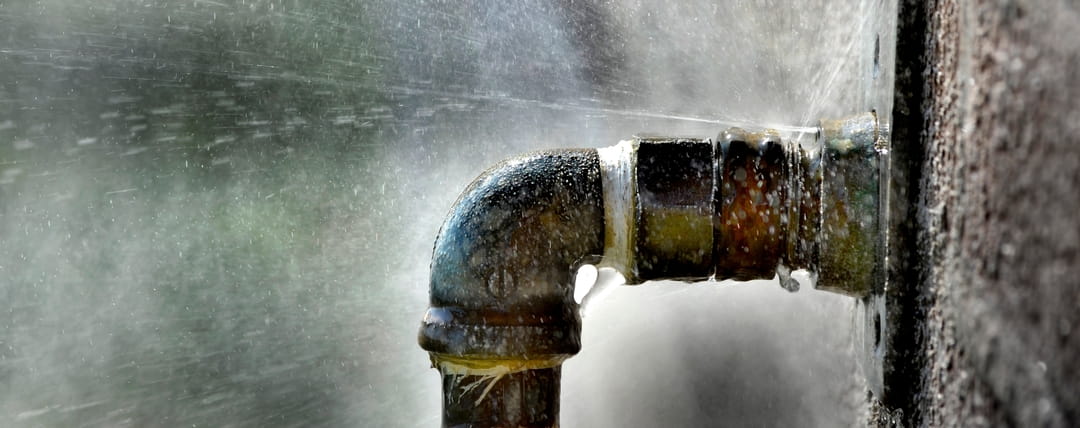
The first priority is stopping the flow. Shut off the main water line and, if safe, isolate the broken section. Insurers expect “reasonable mitigation” right away.
Letting water keep running is negligent & can open the door to insurers trimming the claim later. Burst pipe insurance claim advice always starts here, because every extra minute of water adds damage to the homeowner.
2. Document Everything Before Cleanup Begins
Grab proof before anything gets torn out or dried. Photos, short videos, moisture readings, and clear timestamps show what the true damage looked like.
Adjusters start questioning what was really wet and for how long when that early record isn’t there. That is when scope fights can begin.
This kind of record is also what supports an interior water damage insurance supplement later, when parts of the original claim details come up short.
3. Start Emergency Water Mitigation Properly
Emergency work needs clean paperwork. Insurers look closely at invoices, drying logs, equipment lists, and daily notes.
If that trail is convoluted, parts of the bill disappear from the payout.
Teams that handle water mitigation flood supplements know how to build files insurers can’t brush aside. Clear records make it easier to defend labor and extra dry-out days when the first estimate comes up short.
How the Insurance Claim Process Works When Burst Pipes Are Involved
Most homeowners feel lost once the claim starts. Mitigation teams, on the other hand, see the same pressure points over and over, especially where money drops out of the scope.
The flow should be understandable so that both sides can protect the value of the work from day one.
Step 1: Filing the Claim and Initial Adjuster Contact
The first call is enough to frame the situation. Stick to facts about what happened and what you can see.
Don’t just assume causes or timelines. Recorded statements can lock in wording that later gets used against the claim.
When an adjuster says something like “we’ll see what dries,” it often means parts of the damage may never make it into the scope. Drying first and deciding later tends to decrease what gets paid.
Step 2: Adjuster Inspection and Scope Creation
Inspections move fast because adjusters focus on what is visible. That, however, often leaves gaps behind walls and inside cabinets. Insulation, subfloor layers, and back sides of built-ins aren’t present in many coverages, even though they should be.
Full dry-out labor also gets trimmed because it is harder to see and easy to question if the records are thin. And this is why you need quality mitigation notes.
Step 3: Initial Estimate vs. Real Repair Costs
First estimates lean low because they are built merely to open the file. The gap shows once real repairs begin.
Supplements come in when the numbers no longer match the work. Some may think that this back-and-forth is a sign that something went wrong, but it’s just a part of the complete water damage insurance claim process.
Common Insurance Claim Problems (and How to Fix Them)
Problem 1: Claim Partially Denied Due to “Long-Term Damage”
Many denials lean on seepage (or long-term leakage) language. Adjusters look at stains or warped materials and may conclude the damage must have taken time to form. Homeowners then ask the same question: Why would a water damage claim be denied when a pipe clearly broke?
The issue is how you document and describe the damage. If early notes sound vague or inconsistent, insurers may label it as slow leakage. Restoration specialists can clarify the situation with moisture readings, photos from day one, and job logs that show when water first appeared. Concise timelines and technical records can turn around the story from ongoing seepage to sudden loss.
Problem 2: Insurance Scope Doesn’t Match Real Repairs
Scopes built during fast inspections miss labor and materials that only show up once walls open and floors come up. The back sides of cabinets and insulation often vanish from many estimates, creating a gap that leaves contractors unpaid for real work.
This is why estimating services are a must. They rebuild the scope around the real work that happened on site. Their job is to translate field reality into pricing language that insurers instantly recognize and allow for fair payments down the road.
Problem 3: Settlement Doesn’t Cover Full Restoration
Even when a claim gets approved, the final number may still fall short. Materials cost more than expected, drying may take longer, and labor can stretch beyond the plan–all adding to the costs.
Supplements can close that gap and add missing work that was performed. They also serve to adjust pricing and justify extra time on equipment and labor. Hence, supplements can recover the money needed to finish the job instead of forcing contractors or property owners to pay out-of-pocket for the loss.
How Restoration Specialists Can Protect Themselves on Claims Resulting from Burst Pipes
Restoration teams are not there to challenge insurers but to protect the integrity of the work they performed and the time they spent on site. Documentation needs to be thorough, and scopes must reflect what actually happened, so that restoration specialists can support the loss with clarity and confidence.
That approach fits the mindset behind Claim Supplement Pro, where the focus centers around accuracy and fair payment.
Why Mitigation Specialists Should Never Rely on Insurance Estimates
Insurance estimates get written quickly with limited access, which leads to speculative drying time and unseen damage that later becomes unpaid labor.
Mitigation specialists who follow burst pipe insurance claim tips know that early estimates are only a starting point because the true scope of the work appears during the mitigation process.
Again, this is why we have supplements. They cover work that never made it into the first estimate and keep teams from working for nothing.
Best Practices for Documentation
Good files move faster because daily logs show a detailed timeline of what happened each day. Meanwhile, moisture maps explain why drying took time, and photo sequences tell the story from wet to dry.
These are not extras but essential water damage insurance claim tips in action. Clear records answer adjuster questions before they’re even asked.
Tight documentation leads to swifter approvals and supplements that face less pushback. Also, restoration teams can spend less time chasing money and have more room for mitigation work.
When to Get Professional Claim Assistance
Waiting too long can weaken a claim. Long delays can lead to missed callbacks, slower progress, and a higher risk of a claim turning into a drawn-out dispute.
Starting claim assistance early gives teams a chance to clarify coverage and fix errors. Stronger scope drives higher, accurate payouts, keeping both property owners and mitigation teams protected.
Signs You Need Claim Supplement Experts
You may need help if the adjuster goes silent or the estimate fails to match the work your team completed. When drying extends beyond expectations, or your crew’s labor and materials aren’t fully accounted for, you need external support.
Apply burst pipe insurance claim tips on time to help your team prevent these gaps from growing and keep the claim on track.
How Claim Supplements Increase Water Damage Payouts
Supplements update the claim to show the true work that was done and add any unpaid labor. They also include equipment days and ensure materials match what was installed on site.
Moreover, supplements bring in code requirements and local pricing–two things that base estimates often ignore. Add those pieces, and numbers will start to mirror the restoration’s true cost.
Many people search for how to negotiate with insurance adjusters on water damage claims. Supplements take that pressure off. Experts no longer need to dissect every point because they present technical proof and pricing data.
Commercial Claims Caused by Burst Pipes: What Property Owners Must Know
Because of their size, commercial water damage claims often cost more and move slowly with greater review & paperwork involved. Missed steps show up as lost income and unpaid work.
Business interruption adds constraint, as every closed day means lost revenue and contracts at risk.
Documenting damage quickly and starting mitigation right away determines how much the claim pays. It goes without saying that delays in commercial spaces can become exorbitant.
Frequently Asked Questions About Insurance Claims Caused by Burst Pipes
Can Insurance Deny a Claim Caused by Burst Pipes?
Yes–and most denials lean on words like neglect, seepage, or wear and tear. Many burst pipe insurance claim problems come from weak early documentation, which means a denial can often be challenged if better proof is added.
How Long Does This Type of Claim Take to Settle?
Some files close in weeks, but others drag on for months when the scope keeps changing. Burst pipe insurance claim tips always stress early documentation because delays often start when damage was never explicitly shown at the beginning.
Should Homeowners Let Mitigation Specialists Talk to Insurance?
Yes–as long as homeowners stay informed of what’s happening. Letting professionals explain the work helps the burst pipe insurance claim move forward without guesswork.
Final Thoughts: Full Payouts Don’t Happen by Accident
Burst pipe losses rarely get paid right the first time. Early proof and complete records are the vital burst pipe insurance claim tips most owners learn too late.
Water mitigation and flood supplements fix what first estimates miss, and estimating services convert real work into numbers insurers accept.